
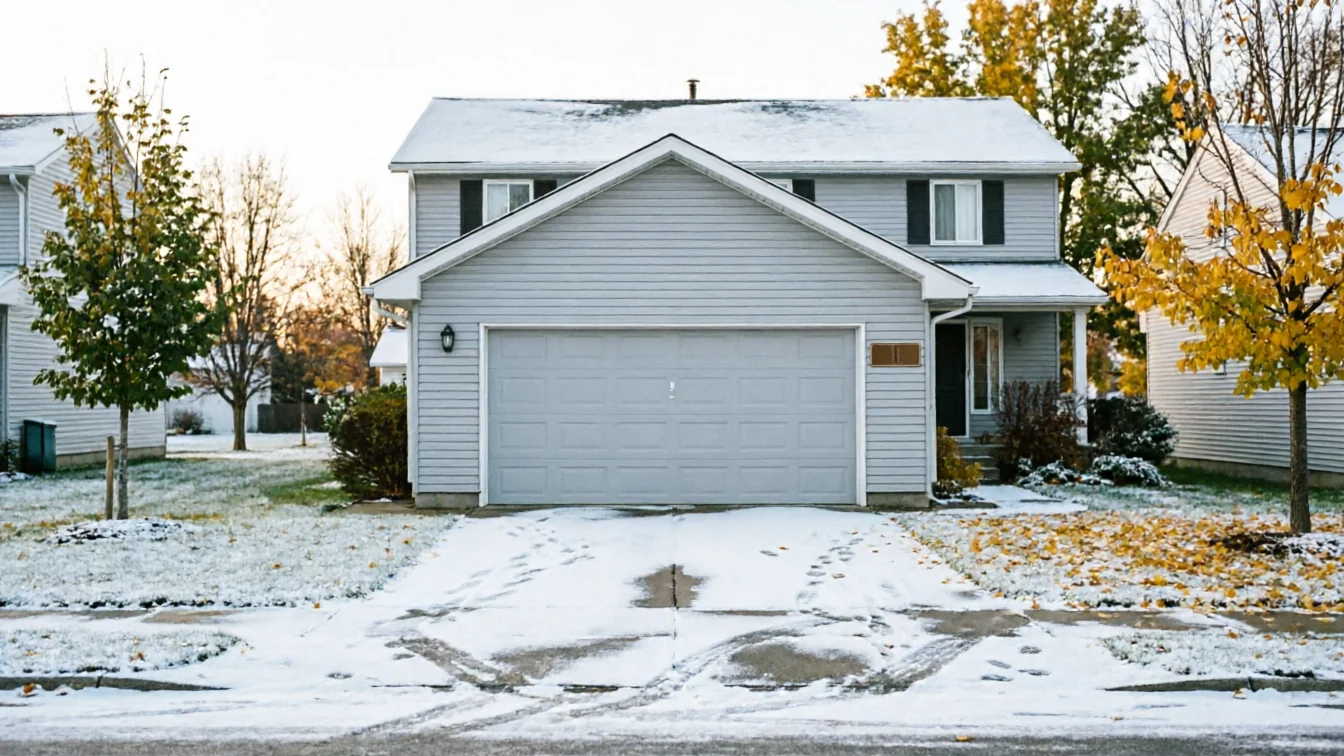
 What a Broken Spring in Cold Weather Means for a Kankakee Garage
Kankakee's housing stock dates mostly to 1938-1993, and severe cold stresses older torsion springs hard.
Kankakee's Garage Doors Weren't Built for This Cold
Kankakee homes built between 1938 and 1969 often have original garage door hardware never updated for severe cold. Here's when to wait, watch, or call.
Local detail
When Waiting Is Fine
Not every noise or scuff means you need a truck in your driveway. A squeaky roller that still moves freely, a hinge with a little surface rust, a panel with a cosmetic dent from a stray basketball - none of that is an emergency. Across the Kankakee service area, where roughly 11,490 of the houses are owner-occupied, a lot of garage doors are original or close to it, going back to a housing stock built mostly between 1938 and 1993 with a median year of 1969. A door that old has earned some character. If it still opens and closes on its own power, travels evenly, and reverses when it hits something, you can let the cosmetic stuff ride until it bothers you enough to call, or until you're doing other work on the house anyway. What you shouldn't ignore is a door that hesitates, jerks, or needs a shove partway through the cycle - that's a different category, covered below. Waiting is fine right up until the symptom tells you something underneath is wearing out, not just looking old.
The area
What Is Going On
Most of the doors we're called out on sit on houses from that same 1960s-70s wave that makes up the bulk of the stock here, spread across the thirteen named areas that make up this market. The failure pattern is consistent: torsion springs rated for a certain number of cycles finally give out after decades of daily use, galvanized cable starts to fray where it wraps the drum, and steel track that was shimmed once in 1974 has worked loose again. None of that is unique to one street - it shows up whether the call comes from in town or from out toward Aroma Park, three miles off, or further out past Bradley and Bourbonnais. The housing age is the common thread, not the zip code. A door built in the Johnson era of garage hardware wasn't engineered with today's opener loads or insulation expectations in mind, so when something finally lets go, it's rarely a surprise to anyone who's looked at the hardware up close. What's going on, most of the time, is simply a door reaching the end of a part's working life after forty, fifty, sixty years of opening and closing.
What we find
When It Stops Being a DIY Job
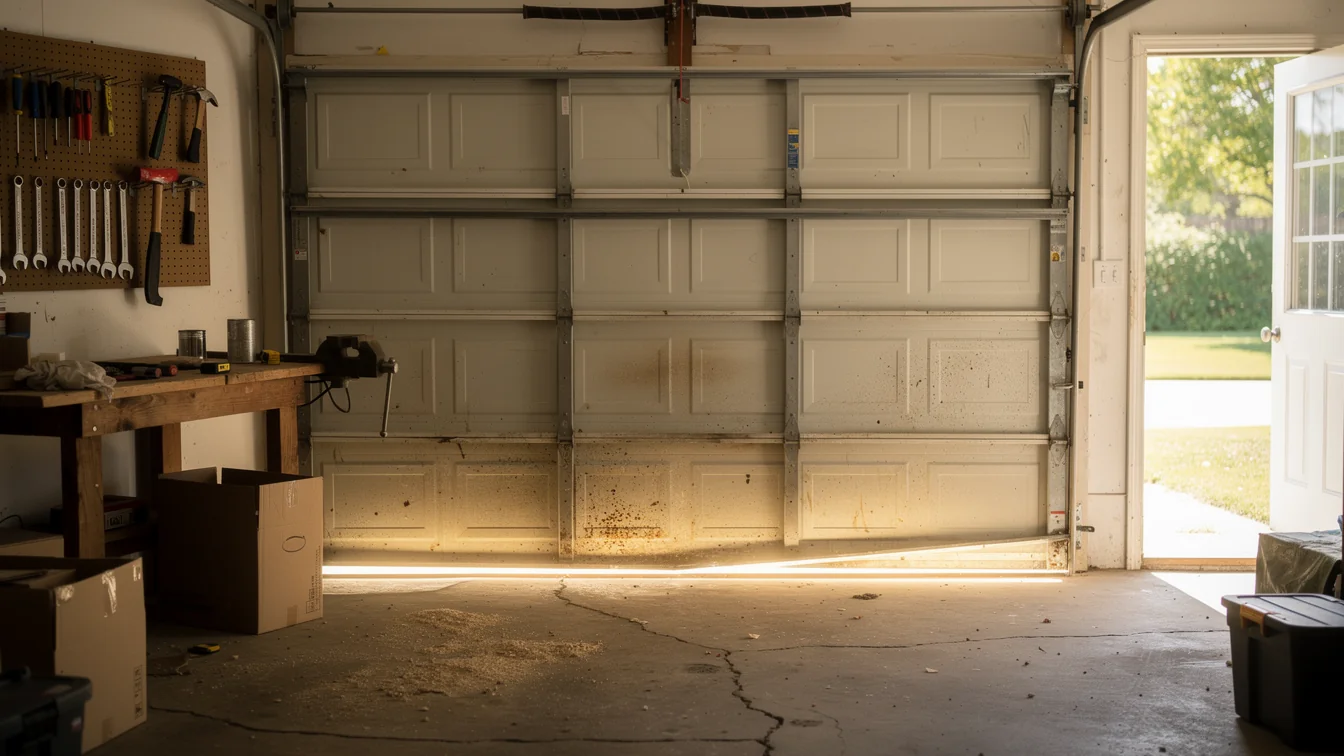
A broken torsion spring on a double door is not a weekend project, full stop - the spring is under enough tension to cause real injury, and on a lot of these older houses the torsion hardware is side-mounted in a configuration that newer universal replacement kits don't always fit cleanly. If a cable has jumped the drum, if the bottom bracket has pulled away from the track, or if the door is sitting crooked in its opening, that's a call, not a YouTube afternoon. Here's the honest part: on doors from the 1960s and 70s stock that's common across this area, we sometimes have to special-order a part because the original hardware isn't something anyone keeps on a shelf anymore. That means a repair that would be same-day on a newer door can run a few days out on an older one while the part ships. We'll tell you that up front rather than promise a timeline we can't hit. If the springs, cables, and track are original to a house built before 1969, replacing the whole operating system at once is often the more honest answer than patching it piece by piece.
How we work
How Local Conditions Play In
This area sits in a cold-severe climate band, and that matters more for an old door than people expect. Steel panels contract in deep cold, which is when a track that's already a quarter-inch off alignment starts binding instead of just rattling. Torsion springs lose a measurable amount of lifting force in cold temperatures, so a spring that was marginal in October can leave an opener straining by January. Weatherstripping on a door from the 1960s or 70s has usually been replaced at least once, but the vinyl on older bottom seals goes brittle and cracks in a hard winter, letting in drafts and road salt spray. None of this is dramatic - it's slow wear that cold weather speeds up on hardware that was already decades into its service life. If your door has started acting up specifically when temperatures drop, that's a cold-weather symptom on old hardware, not a coincidence, and it's worth having someone look at the spring tension before it fails on a night when you'd rather not be outside fixing it.
Questions
Common questions
My garage door is noisy but still works fine, do I need to call someone now
Not necessarily. If it opens and closes smoothly, travels evenly, and reverses on obstruction, noise alone can wait. Given how much of the housing stock here dates to the 1960s and 70s, some creak and rattle is normal for the age of the hardware. Call if the noise changes suddenly or comes with hesitation.
Why does my door act up more in winter
Cold affects old torsion springs directly - they lose some lifting force as temperatures drop, which is a bigger deal on a spring that's already decades old. This area sits in a cold-severe climate band, so that effect is more pronounced here than in milder regions. Track binding and brittle weatherstripping also show up more in winter.
Can you get parts for a garage door from the 1960s or 70s
Often, but not always same-day. A lot of houses in this service area have original hardware from that era, and some of it isn't stocked anywhere locally anymore, so we sometimes special-order a spring size or track bracket. We'll tell you honestly if your repair is one of those before we start.
Recommendation
You Might Also Like
More garage door guides for Kankakee homeowners.
What a Broken Spring in Cold Weather Means for a Kankakee Garage
Kankakee's housing stock dates mostly to 1938-1993, and severe cold stresses older torsion springs hard.
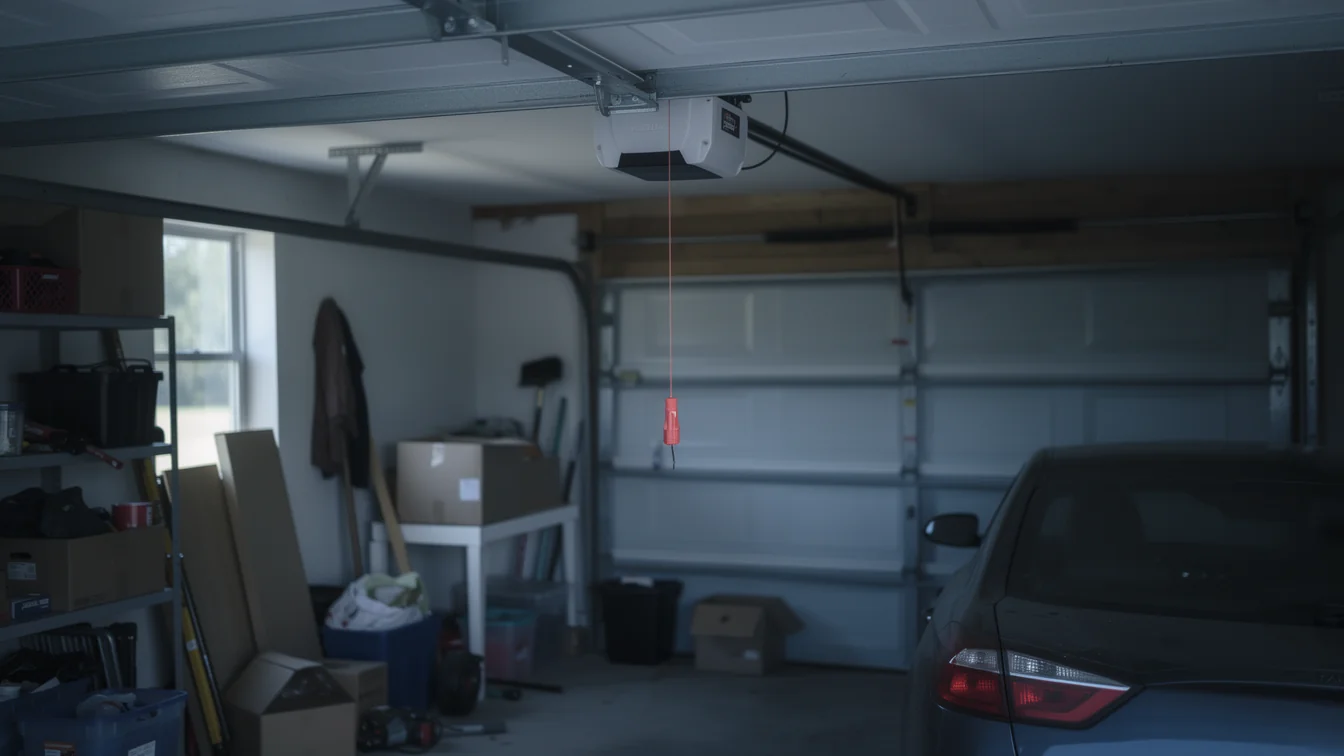 What Actually Happens to Your Opener When the Power Goes Out
A Kankakee, IL look at why garage openers fail during power cuts, how 1960s-70s housing stock and cold-severe winters factor in, and when it's a call, not a DIY fix.
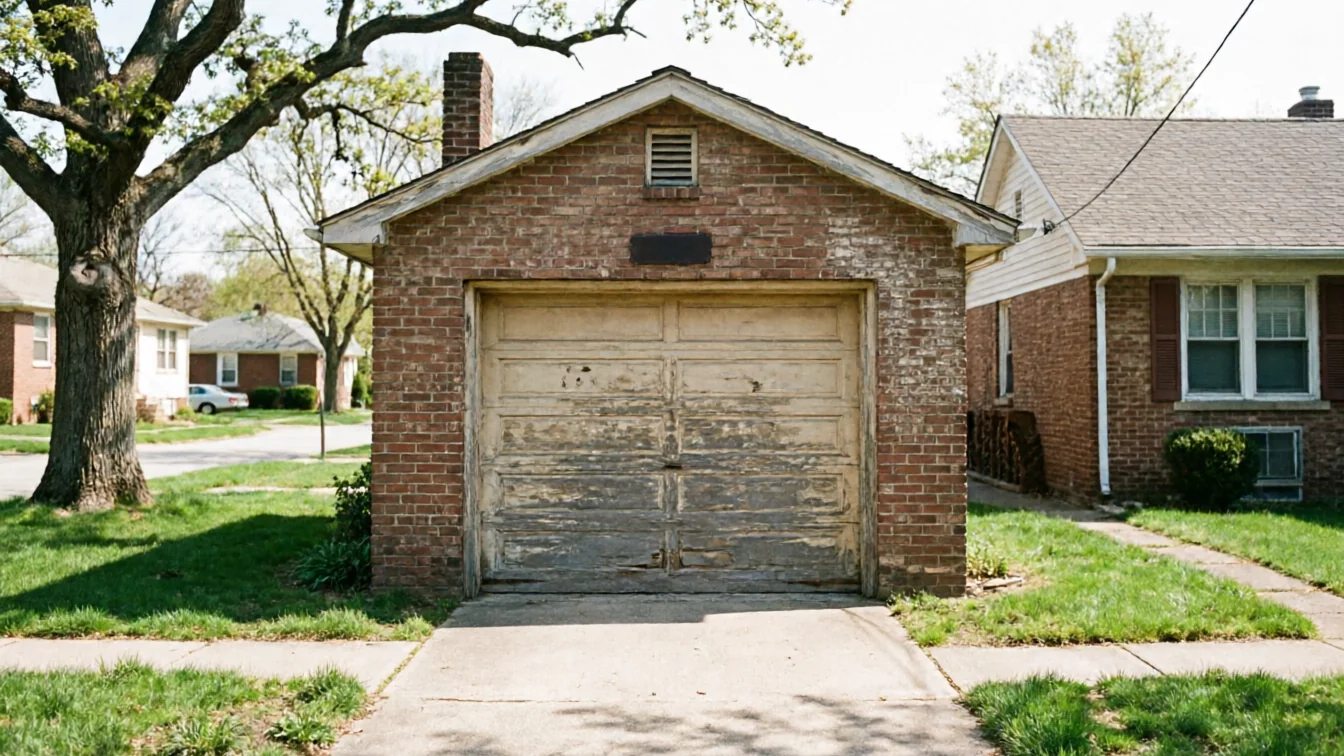 Is Your Old Kankakee Garage Door Worth Fixing, or Done
Kankakee's housing mostly dates to 1938-1969.
Ready when you are
Need a garage door sorted in Kankakee?
Kankakee Garage Door Pros repairs and installs garage doors, springs and openers in Kankakee, IL and the surrounding area.