
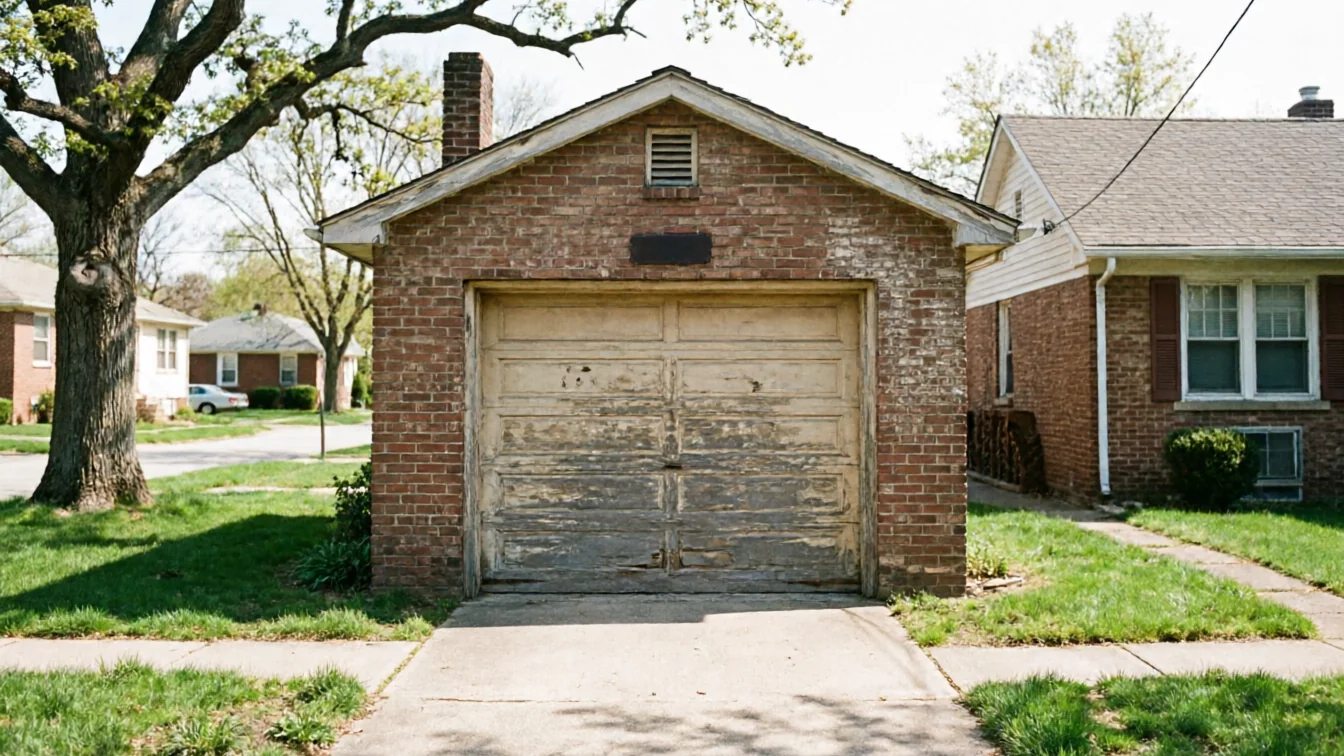
 Is Your Old Kankakee Garage Door Worth Fixing, or Done
Kankakee's housing mostly dates to 1938-1969.
What a Broken Spring in Cold Weather Means for a Kankakee Garage
Kankakee's housing stock dates mostly to 1938-1993, and severe cold stresses older torsion springs hard. Here's when a problem can wait and when it can't.
Local detail
When Waiting Is Fine
Not every spring complaint is an emergency. If the door still rises smoothly on the opener and you just hear a new squeak or see a little surface rust on the coils, that can sit on your list for a week or two, even through a cold snap. A lot of the housing across this service area dates to 1938 through 1993, with the bulk from the 1960s and 70s, so springs that have been doing their job for decades often announce themselves with noise before they fail outright. If the opener is straining a bit but the door is still level going up and down, lubricate the coils, watch it for a few days, and don't panic. Where waiting is NOT fine: if the door drops suddenly, if one side looks higher than the other, or if you see a visible gap in the coil itself. That's not a maintenance item anymore, that's a broken spring, and in a house built before the 1970s running original or first-replacement hardware, a sudden snap under winter load is common, not rare. The honest line is this: a noisy spring can wait for a convenient day, a split one cannot, and in this climate the gap between those two states can close fast.
The area
What Is Going On
Steel contracts when it's cold, and a torsion spring that's already near the end of its cycle life loses flex right when it needs it most. The service area sits in a severe cold climate band, which means winter swings put real stress on metal that's already fatigued from 40 to 80 years of seasonal temperature changes. A spring rated for a certain number of open-close cycles doesn't know what year it is, but it does respond to brittle cold mornings the same way a cold rubber band snaps instead of stretching. In houses built in the 1960s and 70s, which make up most of the stock here, the springs in question were often sized for lighter doors and have been carrying heavier insulated replacements for years without anyone upgrading the spring to match. That mismatch, plus winter cold, is why so many spring failures cluster on the first hard-freeze mornings rather than spreading evenly across the year. It isn't that cold weather breaks a healthy spring out of nowhere. It's that cold weather is usually the final push on a spring that was already near its limit from age and cycle count, and a lot of the springs still in service here are old enough that the push doesn't have to be hard.
What we find
When It Stops Being a DIY Job
A broken torsion spring is not a bolt-and-wrench repair you learn from a video. The spring is under enough stored tension to break a bone or worse if it lets go while you're working on it, and that doesn't change whether the house was built in 1940 or 1990. Where local housing age actually matters is in parts matching: a lot of these homes still have the original bracket spacing or a first-generation replacement system, and matching a new spring to an older track and drum setup isn't always a stock part off the shelf. That's the honest limitation here - on an older house, sourcing the right spring size can take longer than the repair itself, and we won't force a wrong-size spring onto your door just to finish the job same-day. If your door has cables that have jumped the drum, a bent track, or a panel that's cracked from being forced open on a broken spring, that's also past the DIY line. Call it in rather than wedge a 2x4 under the door and leave it. On a cold morning, working with a loaded spring in a garage that hasn't warmed up is worse, not better, than doing it later in the day.
How we work
How Local Conditions Play In
We cover Kankakee and the towns around it - Aroma Park 3 miles out, Bradley at 4, Bourbonnais and Limestone around 6, St. Anne at 9, Manteno at 10, Momence at 11, Clifton at 12, Herscher at 13, Hopkins Park at 14, Grant Park at 15, Donovan at 20. Across that area there are roughly 21,932 households and 11,490 owner-occupied houses, most sitting on that same 1938-1993 build timeline with a median around 1969. That matters for spring work specifically: it's a large population of doors old enough to be on original or second-generation hardware, all exposed to the same severe cold winters. With a median household income of $72,250 in the area, replacement is usually affordable when a repair isn't worth it anymore, but that's a case-by-case call, not something we decide before we look at the door. The practical takeaway: if you're in one of these towns and your door is from that same era, treat a cold-morning spring failure as expected wear catching up with it, not a fluke, and don't wait on a split coil just because the weather makes it inconvenient to deal with.
Questions
Common questions
Why do garage door springs break more in winter here?
Cold steel loses flexibility, and a spring that's already near the end of its cycle life from age has less give left to lose. A lot of the housing in this area dates to the 1960s and 70s, so many springs are old enough that a hard freeze is the final push, not the only cause.
Can I replace a torsion spring myself to save money?
We don't recommend it. A torsion spring holds enough stored tension to cause a serious injury if it releases while you're working on it. On older local houses the bracket spacing can also differ from newer stock parts, which makes a DIY mismatch more likely, not less.
My door is noisy but still opens fine, is that a spring problem?
It might be, but noise alone usually means it can wait a bit rather than being an emergency. Watch for a level door on both sides and no visible gap in the coil. A sudden drop or an uneven door is the sign that waiting is no longer the safe choice.
How do I know if replacing the spring is worth it versus a bigger repair?
On houses from the 1938-1993 era that make up most of this area, a snapped spring is often isolated, but if the cables jumped the drum or a panel cracked when the door was forced, that's a separate repair. We look at the whole door before quoting, not just the spring.
Recommendation
You Might Also Like
More garage door guides for Kankakee homeowners.
Is Your Old Kankakee Garage Door Worth Fixing, or Done
Kankakee's housing mostly dates to 1938-1969.
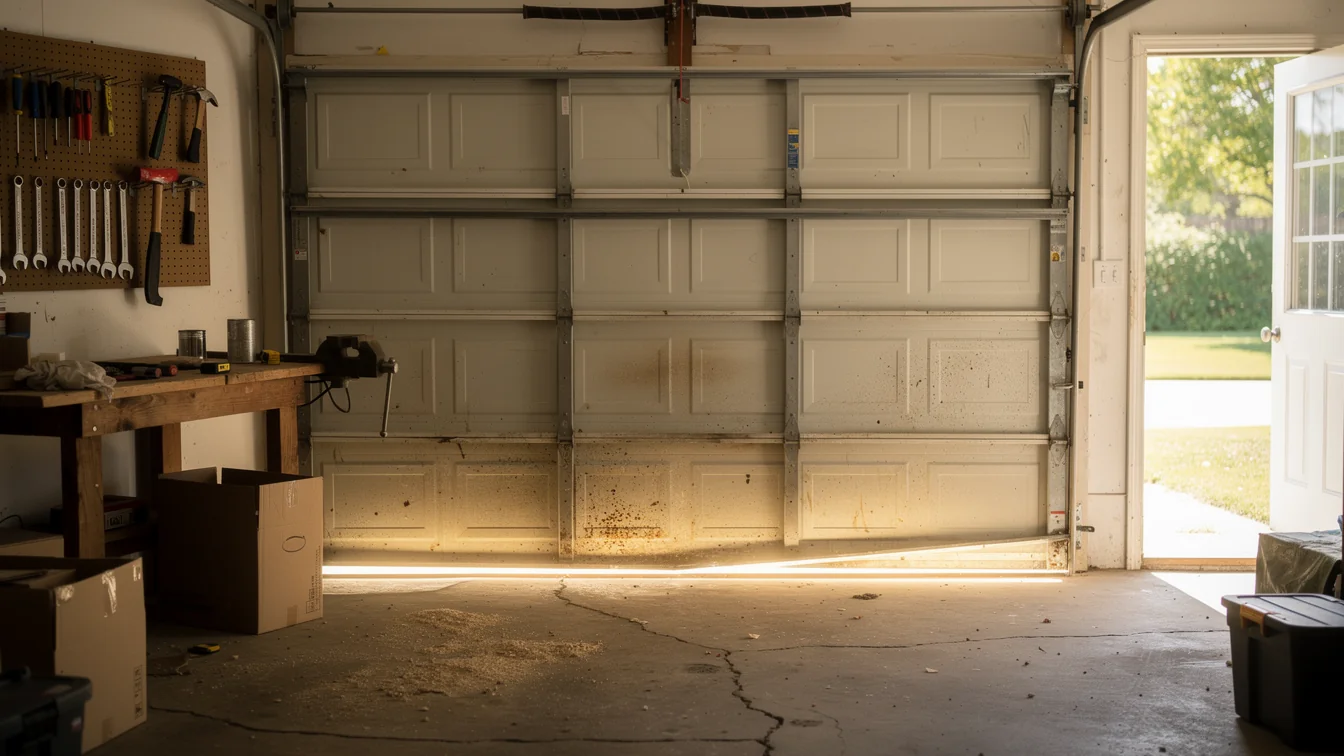 Kankakee's Garage Doors Weren't Built for This Cold
Kankakee homes built between 1938 and 1969 often have original garage door hardware never updated for severe cold.
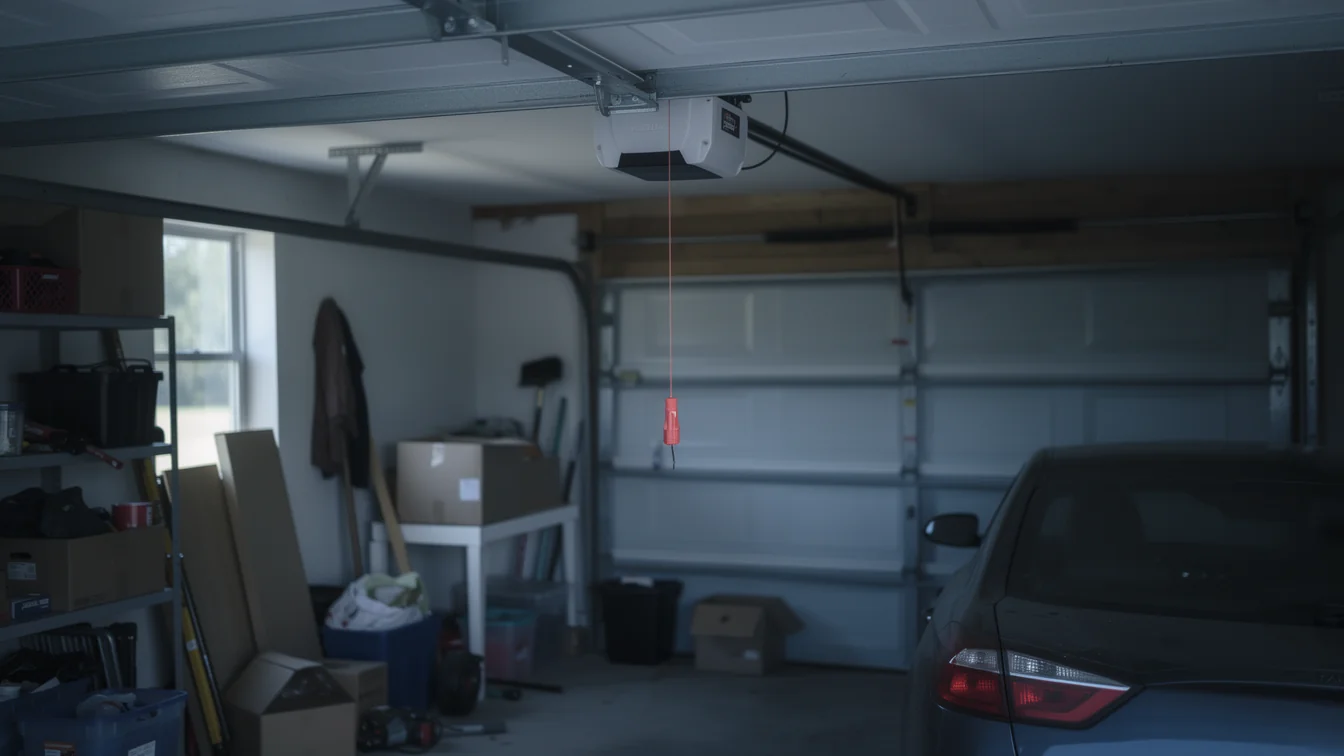 What Actually Happens to Your Opener When the Power Goes Out
A Kankakee, IL look at why garage openers fail during power cuts, how 1960s-70s housing stock and cold-severe winters factor in, and when it's a call, not a DIY fix.
Ready when you are
Need a garage door sorted in Kankakee?
Kankakee Garage Door Pros repairs and installs garage doors, springs and openers in Kankakee, IL and the surrounding area.