 Noises That Mean Something: A Kankakee Homeowner's Guide
A guide for Kankakee homeowners on garage door noises, tied to the area's 1960s-70s housing stock and cold winters, from Kankakee Garage Door Pros.
What Actually Happens to Your Opener When the Power Goes Out
A Kankakee, IL look at why garage openers fail during power cuts, how 1960s-70s housing stock and cold-severe winters factor in, and when it's a call, not a DIY fix.
Local detail
When Waiting Is Fine
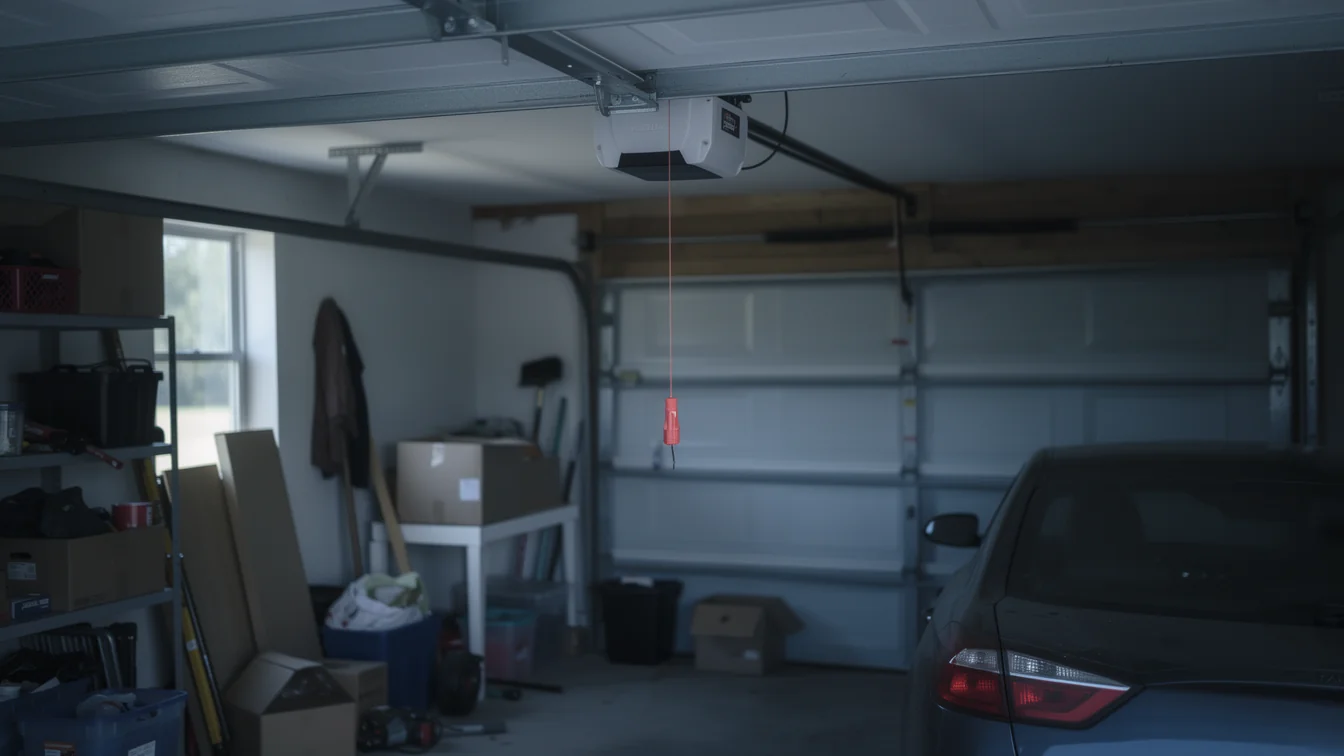
If the power drops for an hour during a storm and your opener goes dead, you don't need to call anyone. Pull the manual release cord - the red handle hanging from the trolley - and the door lifts by hand just like it did before openers existed. That cord disengages the motor from the carriage; it has nothing to do with how old the opener is or whether the circuit it's plugged into is original to the house.
Most houses around here were built between 1938 and 1993, with the typical one dating to 1969, which means plenty of garages are still running on the breaker that was installed decades before anyone added an opener. That's fine for a short outage. The opener doesn't need power to let you in and out, it just needs power to do the lifting for you. Once the lights come back on, the opener re-syncs with the wall switch and remote on its own, usually within a few seconds of plugging back in or the breaker resetting. No reprogramming needed for a simple outage - that's only required if the memory itself got wiped, which is rare on a short cut.
The area
What Is Going On
A garage door opener is a small motor plugged into a household circuit, sometimes backed up by a battery pack if the unit has one. When power cuts, the motor stops, full stop - there's no mechanical override inside the unit itself, which is why the manual release exists on the track. Newer openers with a battery backup will keep running on their own for a handful of cycles, but that battery is rated for mild conditions, not for sitting in an unheated garage through a Kankakee-area winter.
This region sits in a cold-severe climate band, and that matters more for openers than people expect. Battery backups lose a meaningful chunk of their rated capacity in sustained cold, so a backup that opened the door six times in a store demo might manage two or three here in January. On top of that, a lot of the area's housing - built mostly in the 1960s and 70s across the thirteen named communities this shop works near - has garage wiring that predates grounded, GFCI-protected circuits. That's not a failure of the opener. It's a mismatch between an appliance built in the last ten years and a circuit built sixty years ago.
What we find
When It Stops Being a DIY Job
Pulling the release cord and lifting by hand is a short-term fix, not a permanent one. If the power comes back and the opener still won't run - no light, no hum, nothing - stop flipping the breaker and call someone. A breaker that trips every time the opener tries to start usually means a short in the motor winding or in wiring that's aged out, and that's an electrical problem riding along with a garage door problem.
With roughly 11,490 owner-occupied houses in this service area, most are still running whatever garage circuit came with the house, not a circuit sized for a modern opener with a built-in battery and Wi-Fi radio. If you smell anything hot, see scorch marks near the wall unit, or the opener trips the main panel rather than its own breaker, that's past the point of a reset. We don't do panel rewiring - that's an electrician's job - but we can tell you whether the opener itself is the problem before you pay someone to open a wall. Figuring that out first saves a second truck visit.
How we work
How Local Conditions Play In
The thirteen communities this shop sits among range from Aroma Park, three miles off, to Donovan, twenty miles south, and the garages in between aren't all built the same. Some are insulated additions tucked under the main roofline; plenty of others, especially on the older 1960s and 70s stock that makes up most of this area, are detached, unheated, and exposed to full cold. That gap is what decides whether a power cut turns into a real inconvenience or just a five-minute hand-lift.
An opener motor and its logic board don't love big temperature swings any more than a battery does. Cold contracts the lubricant in the gear housing, which is part of why an older opener groans louder in January than it did in August, power outage or not. None of this means you need to replace an opener just because winter is coming. It means that if yours is already marginal - slow to respond, struggling on the up-cycle, losing backup power fast - a cold spell with an outage attached is what finally shows it.
Questions
Common questions
Will my garage door opener lose its programming if the power goes out?
Usually not. A short outage just stops the motor; the memory for your remote and keypad codes is retained. You may need to re-sync the wall console clock or a smart-home connection, but the stored codes for opening the door typically survive a normal power cut.
Does my opener need a battery backup given how cold it gets here?
Not necessarily - it depends on whether you need the door to open during an outage specifically, since the manual release cord works with no power at all. A battery backup helps, but in a cold-severe climate like this one, expect reduced performance from it compared to the rated specs.
Can a power surge from an outage damage my opener?
It's possible, particularly on older circuits common in this area's 1960s and 70s housing stock that lack surge protection. If the opener won't respond at all after power returns and the breaker isn't tripped, that's worth a diagnostic check before assuming the unit is dead.
Recommendation
You Might Also Like
More garage door guides for Kankakee homeowners.
Noises That Mean Something: A Kankakee Homeowner's Guide
A guide for Kankakee homeowners on garage door noises, tied to the area's 1960s-70s housing stock and cold winters, from Kankakee Garage Door Pros.
 What We Actually Check When We Come Out
A straight look at what's included when you book a garage door service call in Kankakee, from spring checks to the 1960s-70s hardware common across the area.
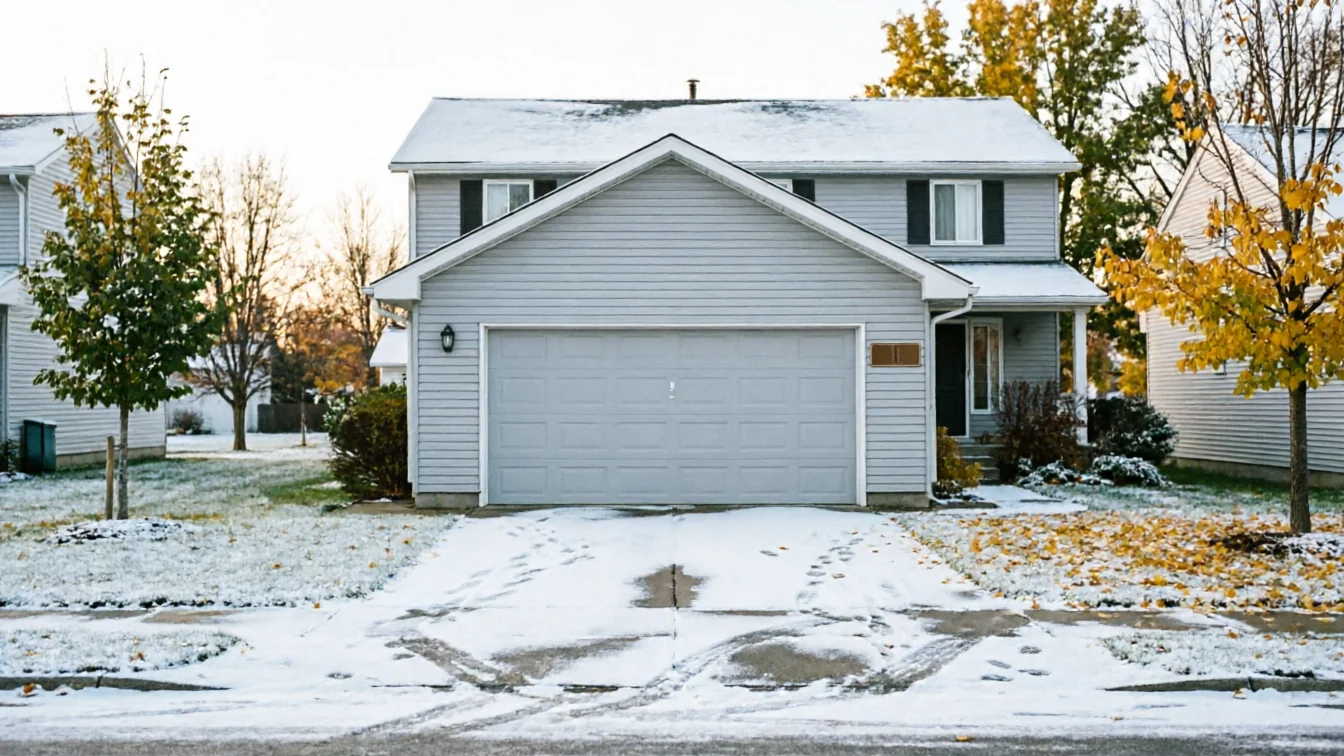 What a Broken Spring in Cold Weather Means for a Kankakee Garage
Kankakee's housing stock dates mostly to 1938-1993, and severe cold stresses older torsion springs hard.
Ready when you are
Need a garage door sorted in Kankakee?
Kankakee Garage Door Pros repairs and installs garage doors, springs and openers in Kankakee, IL and the surrounding area.