
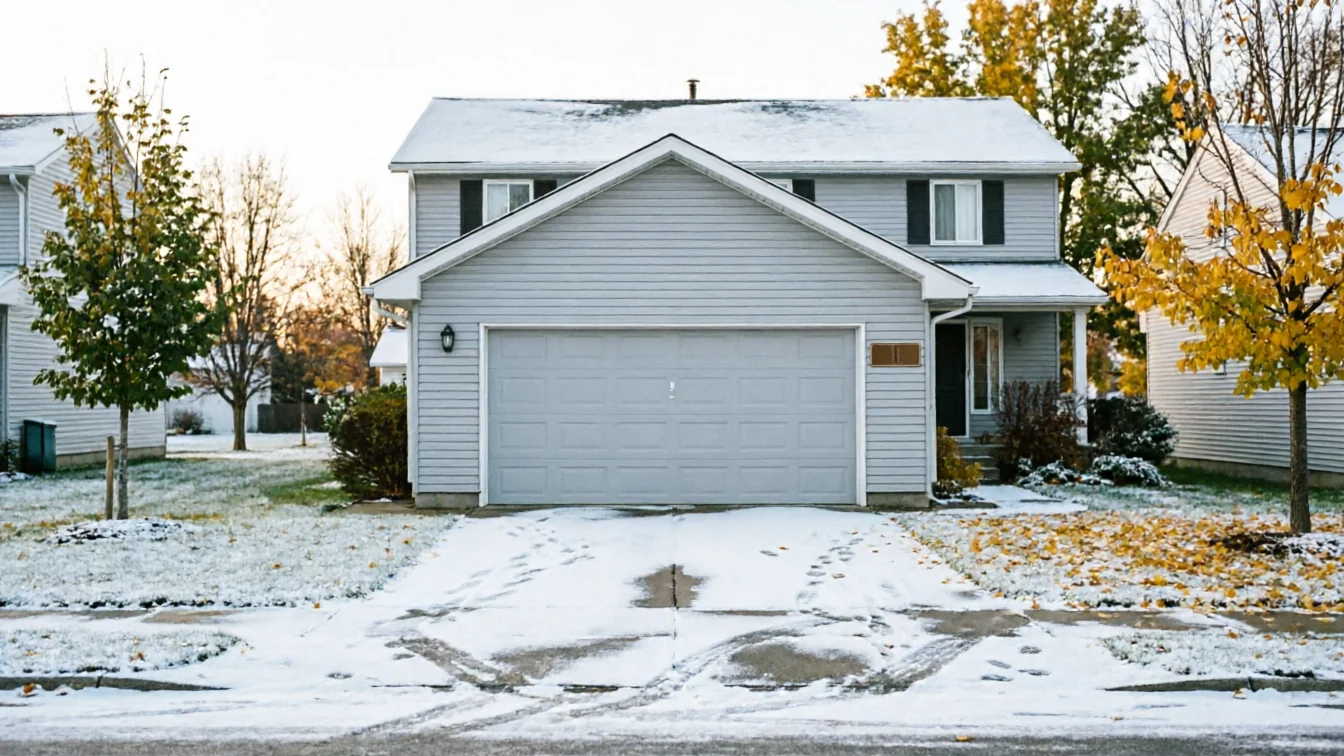
 What a Broken Spring in Cold Weather Means for a Kankakee Garage
Kankakee's housing stock dates mostly to 1938-1993, and severe cold stresses older torsion springs hard.
Is Your Old Kankakee Garage Door Worth Fixing, or Done
Kankakee's housing mostly dates to 1938-1969. Here's how that age and the area's cold-severe climate decide whether your garage door is worth repairing or replacing.
Local detail
When Waiting Is Fine
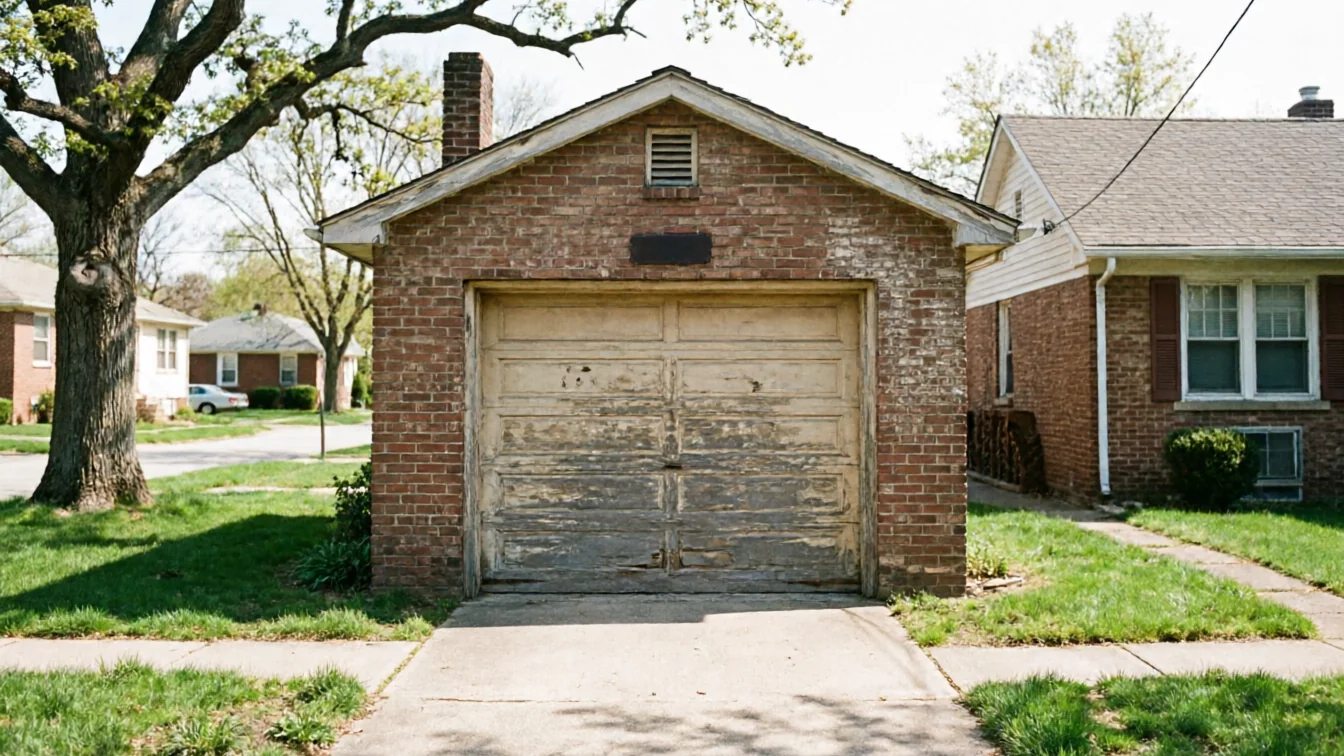
Not every noise or sag means a service call tonight. If the door still opens and closes square, and the only complaint is a squeak on the rollers or a slight shudder near the top of the travel, that's a maintenance item, not an emergency. Houses in Kankakee's older neighborhoods mostly went up between 1938 and 1969, the heart of the build-out across this service area, and a lot of those original doors are still running on hardware that's older than the owner currently driving under it. A dry roller or a loose hinge screw doesn't need a truck out same-day. Lubricate the rollers, snug the hinge bolts, and watch it for a week. If the noise stays the same or fades, you've bought yourself time. Where I'd push that back: if the sound changes pitch, gets louder, or you notice the door hesitate mid-travel, that's different. That's usually a spring losing tension or a cable starting to fray, and those don't wait politely.
The area
What Is Going On
Most of the trouble calls I get on older doors in this area trace straight back to F2-era construction: single torsion spring setups, steel panels with thin or no insulation, and track brackets fastened straight into framing that's shifted a little over fifty-plus years. Across the 13 communities we cover, from Aroma Park three miles out to Donovan twenty miles south, most garages still carry the same basic hardware builders put in during the 1960s and 70s. That's not a flaw, it's just the era. The spring metal fatigues with every cycle, and a door opened twice a day for fifty years has put a lot of cycles on a part never meant to last forever. Panels dent and the seams loosen where the hinges bolt through. None of this means the door is junk. It means the parts wear out in a predictable order, and knowing which part failed tells you whether you're looking at a twenty-minute fix or a door that's fighting you on every point at once.
What we find
When It Stops Being a DIY Job
A broken torsion spring on a double door is not a safe weekend project - the wound spring stores enough force to break a hand or worse, and that's true no matter how handy you are. Beyond that, there's a line I draw for my own customers. If the track is bent, if the bottom panel has rusted through from years of water sitting at the slab, or if the door is a wood panel style from before insulation requirements tightened, I'll usually recommend replacement over repair, because the parts for that generation of door are getting harder to source and the labor to fit something custom starts costing more than a new door. With median household income here at $72,250, a lot of owners are weighing a $300 spring job against a $1,200 replacement, and the math usually favors fixing first - as long as the door itself is still square and the track is straight. Once it isn't, repair stops being the cheaper option.
How we work
How Local Conditions Play In
Kankakee sits in a cold-severe climate band, and that changes what wear looks like on an old door. Steel contracts in deep cold, and a panel that's slightly out of square in July can bind hard in January. Out of roughly 11,490 owner-occupied houses across this area, a good share still have the original steel panel door that came with the house in the 1960s or 70s, uninsulated or close to it, and those are the doors that feel the cold first - stiff openers, slow travel, springs that seem to lose tension faster once temperatures drop. If your door has always worked fine in summer and only gives you trouble from December through February, that's often the spring tension needing adjustment for the season, not a sign the whole unit is failing. I'd rather true up a spring in the fall than get the call in a January freeze when the garage is the only thing between a dead car battery and the cold.
Questions
Common questions
How do I know if my garage door is too old to repair?
Check the track and the bottom panel first. If the track is straight and the panel hasn't rusted through, most doors from the 1960s-70s building era common here are still worth fixing. If the frame is bent or the panel has rotted or rusted at the base, replacement usually makes more sense than chasing parts for an older design.
Why does my old door get worse in winter?
Steel panels and spring metal both react to cold. In a cold-severe climate like this one, a door that runs fine in summer can bind or feel heavy once temperatures drop, often because spring tension needs a seasonal adjustment, not because the whole door is failing.
Is a broken spring something I can fix myself?
No. A wound torsion spring holds enough force to cause serious injury if it lets go while you're working on it. This is one repair worth calling for, regardless of how old or new the door is.
Recommendation
You Might Also Like
More garage door guides for Kankakee homeowners.
What a Broken Spring in Cold Weather Means for a Kankakee Garage
Kankakee's housing stock dates mostly to 1938-1993, and severe cold stresses older torsion springs hard.
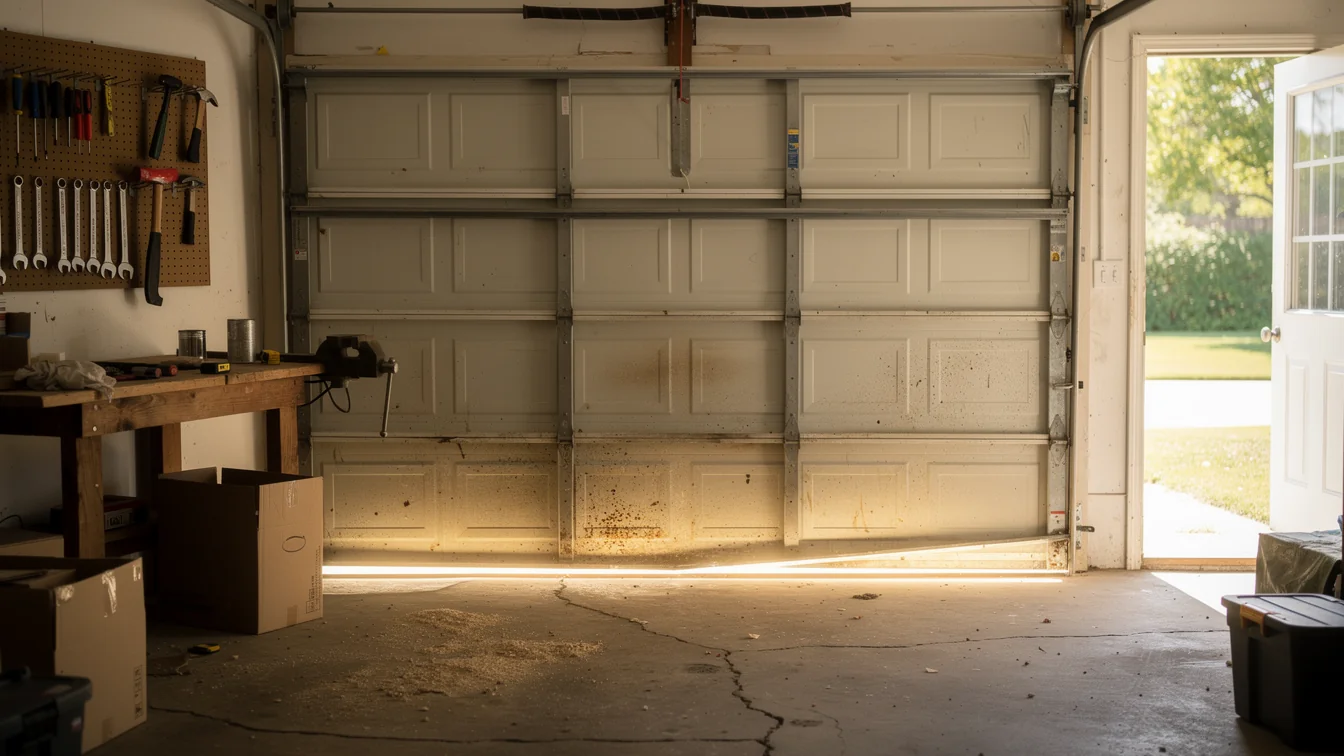 Kankakee's Garage Doors Weren't Built for This Cold
Kankakee homes built between 1938 and 1969 often have original garage door hardware never updated for severe cold.
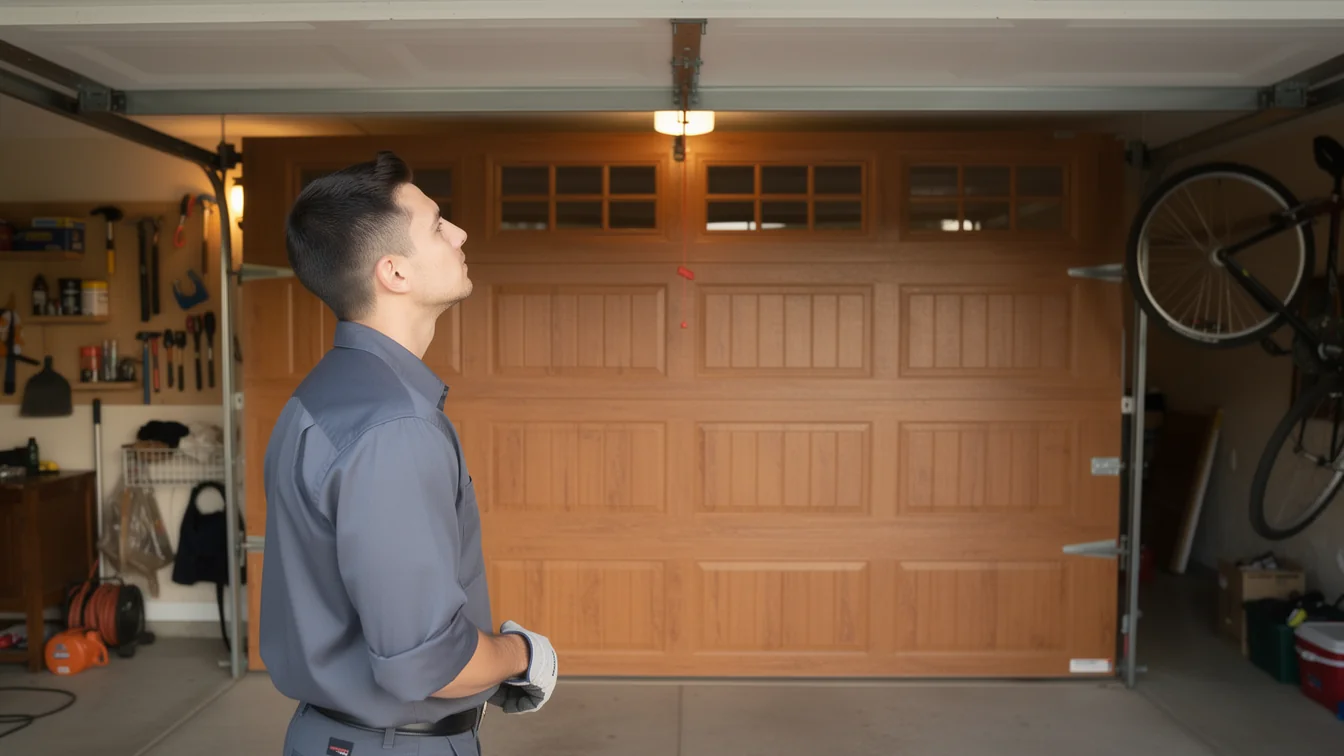 Noises That Mean Something: A Kankakee Homeowner's Guide
A guide for Kankakee homeowners on garage door noises, tied to the area's 1960s-70s housing stock and cold winters, from Kankakee Garage Door Pros.
Ready when you are
Need a garage door sorted in Kankakee?
Kankakee Garage Door Pros repairs and installs garage doors, springs and openers in Kankakee, IL and the surrounding area.